I have a confession to make: my family tree is an absolute chaotic masterpiece. If you took a look at my tree on Ancestry.com right now (or here on my site, you would see a sprawling, messy, beautiful web of history that eerily mirrors how my mind works.
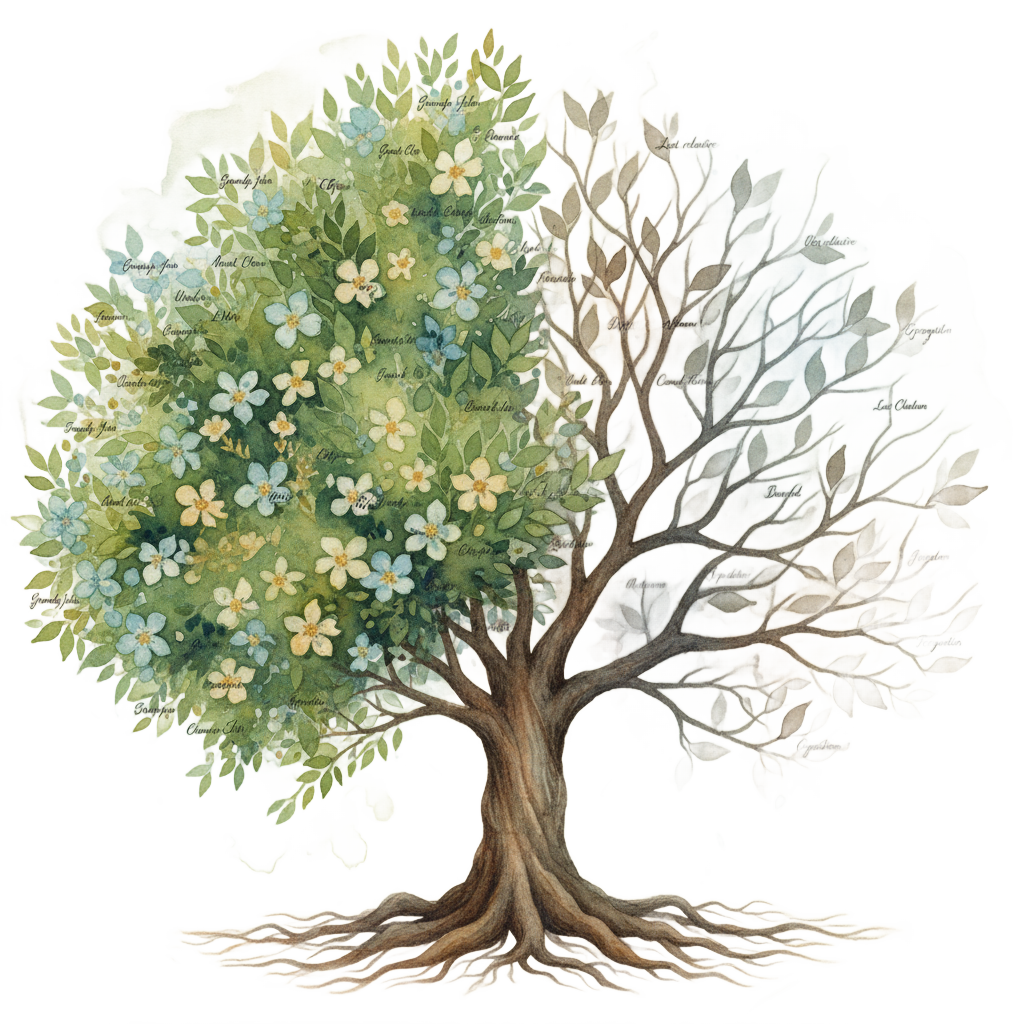
Some branches are so thick with detail you can practically smell the woodsmoke from my ancestors’ kitchens. You can see them in the fields. Other branches look like a bare winter oak—just a lone name floating out in space with absolutely zero context.
When I got hooked on family history, I quickly realized there are two very distinct ways to play the game: I could go deep, or I could go wide. For the longest time, I felt like I was doing it wrong because I couldn’t stick to just one style.
Now? I’ve realized that riding the wave between both is exactly what makes the hobby so addictive.
The Thrill of the Deep Dive: Playing History Detective
There are days, and sometimes weeks, where I become utterly obsessed with one single person. I don’t just want to know when they were born and when they died; I want to know what they ate for breakfast, what school they attended, who they married, how many kids did they have…? I want to see the complete picture of their lives.
When I’m in this mode, finding a single draft registration card with a man’s vital statistics or a grainy local newspaper clipping with a photo attached is like striking gold. Just last month, I found a fun article about a town where the members of the “Women of the Moose” took over the city for the day. (Neta Cranford, who got to be the “Police Chief” for a day, is the paternal grandmother of the wife of my uncle.)
Going deep means I spend hours researching things that have absolutely nothing to do with genetics. I’ll look up maps of the town to see if someone’s house is still standing on Google Earth. I’ll read about the specific economic collapse that forced their family to migrate. It’s incredibly slow work. And while I deep dive, it leaves huge chunks of my tree completely blank. But the feeling of bringing a “ghost” back to life is incredible.
The Rush of Going Wide: Collecting the Leaves
But then, my mood shifts. Maybe I hit a brick wall with my great-great-great-grandfather who was illegitmate, or maybe I just don’t have the patience for reading handwritten 18th-century Danish cursive today. That’s when I turn into a name collector.
Going wide is pure, unadulterated dopamine. I click on a tiny green hint, a match pops up, and bam—I just discovered three more great-aunts, four great-uncles, and a whole slew of new surnames to track. It feels like a video game where you’re clearing the fog off a map.
[Me] ─── [Parents] ─── [Grandparents] ─── [Great-Grandparents] 🚀 (100+ new cousins found!)There is a distinct satisfaction in watching your total person count tick up from 200 to 500 to over a thousand. (In my case, I’m up over 31,000 as I write this!)
It feels like building an empire. The danger here, of course, is that it’s easy to get sloppy. If you move too fast, you accidentally adopt a completely random family from across the country because they happened to have a son named John Smith born in the same year as your actual ancestor. (Personal experience: cleaning up these errors can take 4 times as long or more as it did to add them, so beware, be very beware!)
Why Choose? The Beauty of the Hybrid Tree
I used to think I needed to discipline myself. “Today, you will only work systematically on your maternal-line first cousins,” I’d tell myself.
It never worked. (Having undiagnosed ADHD may be one reason it consistently fails… Look, SQUIRREL! Or in my case, look, another 300 hints I haven’t checked out yet!)
However, what I love about genealogy is that it doesn’t have a deadline. There’s no boss watching over your shoulder. If my brain wants the quick, exciting wins of clicking through hints and expanding the branches as wide as possible, I let it. If I get sucked into a rabbit hole trying to find the passenger manifest of a ship from 1852, I buckle up for the ride.
In the end, family trees don’t have to be perfect, uniform museum exhibits. They can be a reflection of us—gloriously detailed in some corners, wildly sprawling in others, sections waiting for us to come back to, and always a work in progress.
What type of research do you prefer? Deep or wide or both?