
For centuries, genealogy was a pursuit of paper. It relied on ink, parchment, and the assumption that the names recorded in parish registers and royal decrees matched the biological relationships of the families they described. This is genealogical genealogy: the study of a family tree as it exists in the written record.
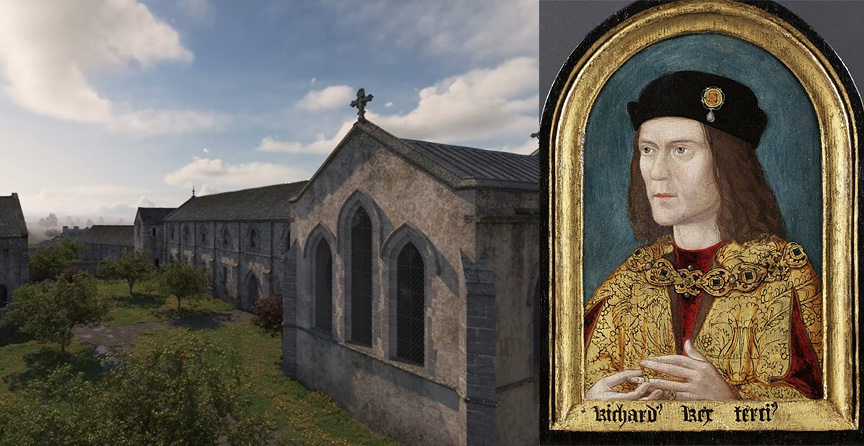
But in 2012, searchers famously unearthed the remains of King Richard III from under a Leicester parking lot. (The location of the old Greyfriars Abbey.) Suddenly, a newer discipline stepped into the light: genetic genealogy. This field uses DNA to verify—or debunk—those long-held paper trails. The results of Richard’s case provided a masterclass in how these two worlds can collide: it revealed a “non-paternity event” (NPE) that still ripples through British history.
The Paper vs. The Proof
Genealogical genealogy builds a “legal” family tree. It tells us who inherited the land, who bore the titles, and told society who to recognize as an heir. Genetic genealogy, however, tracks the actual biological trail through two primary markers:
- Mitochondrial DNA (mtDNA): Passed exclusively from mothers to children. It remains virtually unchanged for generations.
- Y-Chromosome (Y-DNA): Passed from father to son, much like a surname. It allows researchers to track a direct paternal lineage.
When researchers analyzed Richard III’s remains, the mtDNA matched perfectly. They traced an unbroken female line from Richard’s mother, Cecily Neville, down through 17 generations to a modern-day furniture maker named Michael Ibsen living in London. A second person, Wendy Duldig, a 19th-generation descendant of Anne of York, also matched. The paper trail and the DNA agreed: they had indeed found Richard.
A Royal Mystery: The Non-Paternity Event
The story took a turn when researchers looked at the Y-DNA. On paper, Richard III shared a common male ancestor—King Edward III—with several living descendants of the Duke of Beaufort. In theory, Richard and these modern men should have shared the same Y-chromosome profile.
They didn’t.
The researchers established Richard’s Y-DNA haplogroup as G2a-P287. (It’s actually quite rare in Great Britain.) The 5th Duke of Beaufort descendants tested possessed R1b-U152.
The mismatch indicated a non-paternity event (NPE): a point in the family tree where a biological father was not the man recorded on the birth certificate (or royal scroll). Somewhere in the 19 generations between Edward III and the modern Somersets, at least one child was born of an affair or secretly adopted.
Why It Matters
In the world of genealogy, an NPE is more than just a family secret; it can be a “break” in the line. In Richard’s case, the timing of this break is historically explosive.
- If the break happened between Edward III and his son John of Gaunt, it would technically invalidate the entire Lancastrian claim to the throne (including Henry IV, V, and VI).
- If it happened elsewhere in the line, it might cast doubt on the legitimacy of the Tudors who followed Richard.
The Lesson for Modern Genealogists
The case of Richard III reminds us that while documents provide the framework of our history, DNA provides the truth. Genealogical genealogy gives us the stories and the names, but genetic genealogy provides the proof of the bloodline.
When you explore your own history, don’t be surprised if the “king” in your family tree turns out to have a different biological story than the one written in the family Bible. Who knows? You may as easily descend from a stable boy as a royal. It was hinted that Richard’s brother, Edward IV, might have been the son of an archer… (Only the people involved really knew what the possibilities were, and without DNA testing, even they could have only suspected the actual truth.)
On paper, Richard III is potentially my 5th cousin, 18 times removed. Genetically, it’s anyone’s guess.
History, it seems, is often written in ink but ultimately lived in our genes.



Leave a Reply